A Pear Chapter Inspires a Gentle Steamed Dessert
MODERN KITCHENS · 073 / 100
Qimin Yaoshu orchard and culinary context · Northern China · c. 540 CE
Evidence: historically informed adaptation. The historical evidence and modern cooking choices are distinguished below.
The Qimin Yaoshu includes a chapter devoted to growing pears. Ginger appears separately in its fish-cake instructions. Together these references establish two ingredients in a sixth-century textual world, without establishing our dessert.
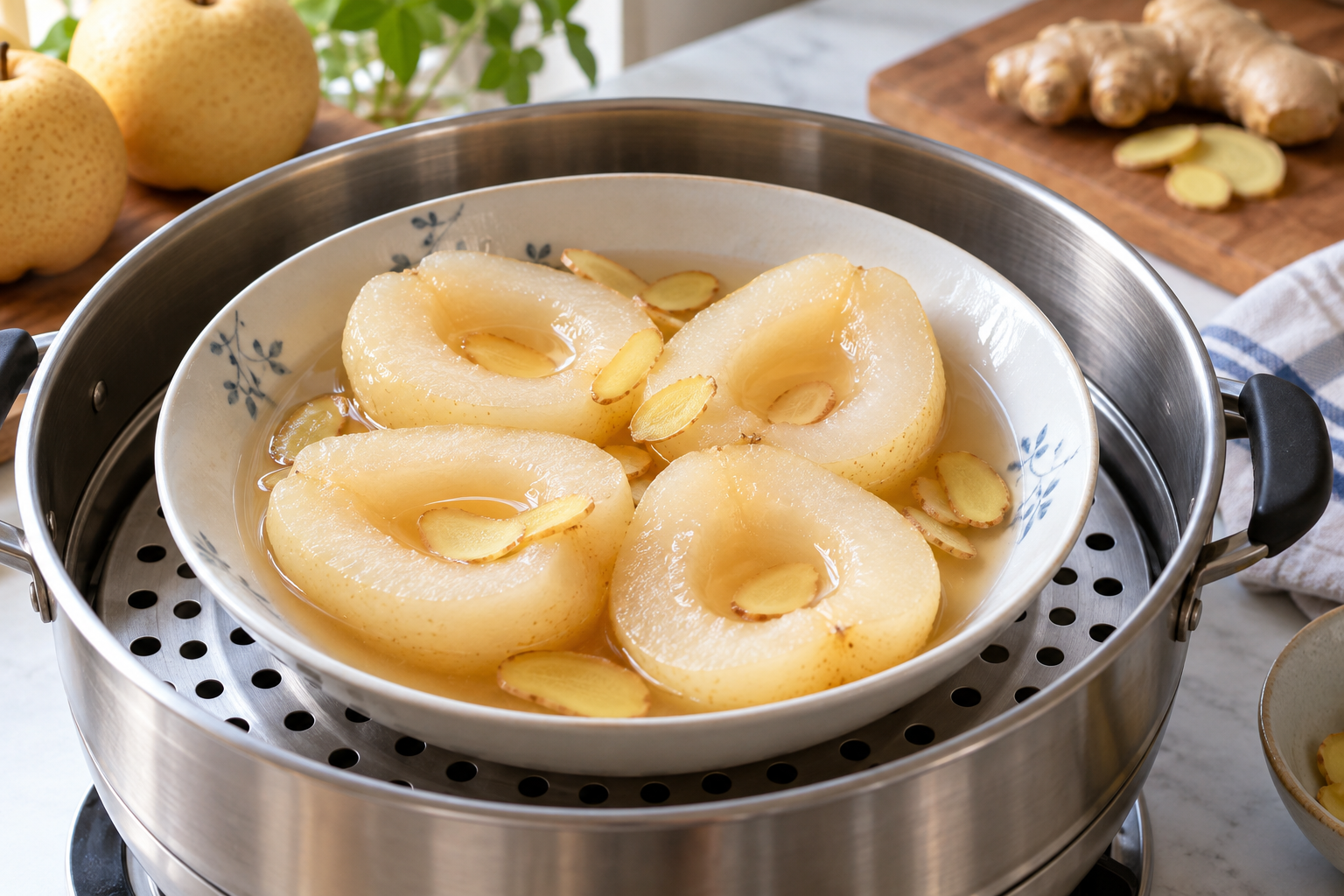
We steam pear halves with fresh ginger as an openly modern combination. The orchard chapter does not supply a ginger-pear recipe, and the fish-cake seasoning does not become evidence for a sweet pairing. Ordinary supermarket pears replace historical varieties, while a little sugar and water create a light syrup. There are no medicinal claims: this is simply cooked fruit for a contemporary meal.
Steam keeps the fruit moist and pale, giving a different result from a browned oven dessert. Place the halves in a shallow heatproof dish that fits inside a covered steamer. The water should remain beneath the dish rather than flooding it. Choose firm ripe fruit and judge doneness with a small knife, because pear varieties soften at different rates.
Serve each half with the juices collected around it. The ginger should scent the liquid without overwhelming the fruit; remove the slices before eating if you prefer. This modest dessert needs no specialist ingredient or historical equipment. Its evidence label matters: the ancient text tells us that pears and ginger were known, while the pairing, steaming method, syrup, quantities and present-day serving style were designed here.
Steamed pears with ginger syrup
Serves 4 · Preparation 15 min · Cooking 30 min · 5 minutes cooling
A modern adaptation for home cooking. Times are approximate.
Ingredients
- 650 g firm ripe pears, about 2 large
- 10 g fresh ginger, peeled and thinly sliced
- 20 g sugar (about 1½ tablespoons)
- 60 ml water
Method
- Halve pears, remove cores and cut a thin slice from their rounded backs so they sit steadily.
- Arrange cut-side up in a shallow heatproof dish. Dissolve sugar in water; spoon over pears and add ginger slices around them.
- Set dish in a covered steamer above gently boiling water. Steam 20–30 minutes until a small knife enters the thickest flesh easily. Check water level.
- Cool 5 minutes. Spoon juices over fruit and serve; remove ginger slices if desired.
Substitutions and adjustments
- Use Asian pears, allowing 10–15 extra minutes if firm.
- Use 15 g honey instead of sugar; this is another modern choice.
Historical choices: The Qimin Yaoshu separately documents pear cultivation and culinary ginger; their dessert pairing and steam method are modern.
Troubleshooting: Hard pears need more steaming. If syrup is thin, simmer it separately for 2 minutes.
Storage and reheating: Refrigerate up to 3 days. Serve cold or steam gently to warm.
Kitchen note: Use a heatproof dish and keep boiling water below it. Open the steamer away from your face.
Sources and further reading
- Jia Sixie, Qimin Yaoshu, volume four contents. Original sixth-century text contents inspected: chapter 37 concerns pears; it does not attest this dessert.
- Jia Sixie, Qimin Yaoshu, fish cakes: 作饼炙法. Original Chinese fish-cake passage inspected: fish, cooked fatty pork, vinegar, scallion, pickled melon, ginger, citrus peel and fish sauce; modern measures and commercial substitutes supplied here.
Browse Ancient Recipes for Modern Kitchens · More creative work at Incoprea


Comments
Post a Comment