Chicken in a Small Grape-and-Vinegar Glaze
MODERN KITCHENS · 058 / 100
Ancient Iranian provisioning context and modern pan recipe · Iranian plateau and Achaemenid court context · Achaemenid Iranian food context, approximately 550–330 BCE
Evidence: historically informed adaptation. The historical evidence and modern cooking choices are distinguished below.
Grape products and vinegar can sit in one source without belonging to one sauce. Polyaenus’s food list describes grape-related drink and vinegar in provisioning, while Iranica’s study discusses birds and must with translation cautions. The records do not preserve this sweet-sharp chicken glaze.
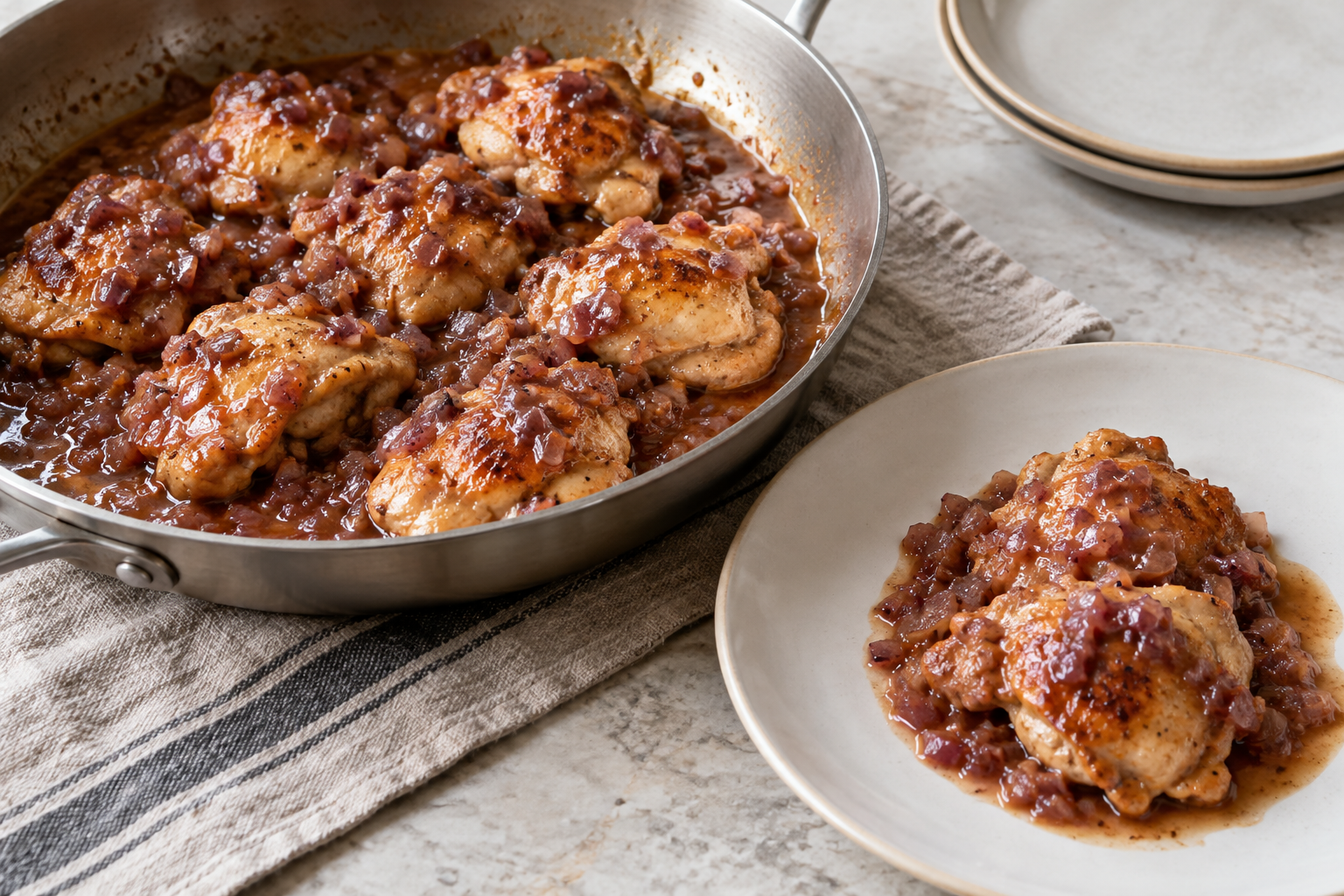
The ancient ingredient frame is approximately 550–330 BCE, mediated in part by later Greek writing. Our chicken thigh pieces are a practical supermarket choice, not an exact identification of every bird in the ancient list. Pasteurized unsweetened grape juice provides sweetness without asking readers to make must or conduct any fermentation.
Brown the meat first so it develops a savoury surface before liquid is added. Boneless thighs stay more forgiving than breast pieces during the final simmer. Keep the sauce modest: it should lightly coat the chicken rather than surround it in a large quantity of sweet liquid. The vinegar amount is deliberately small and can be adjusted after tasting.
Check the chicken’s thickest pieces with a thermometer before reducing the sauce around them. If the meat is already ready but the sauce is thin, lift it onto a clean plate and reduce the liquid briefly on its own. Serve over cooked grain with a vegetable side. The recipe turns a broad ingredient conversation into a manageable supper, while leaving the connection transparent. The glaze, cut, proportions and pan sequence are newly written modern choices; the source list is not an ancient recipe waiting only for quantities.
Grape-and-vinegar glazed chicken
Serves 4 · Preparation 15 min · Cooking 35 min
A modern adaptation for home cooking. Times are approximate.
Ingredients
- 600 g boneless skinless chicken thighs, cut into 3 cm pieces
- 15 ml (1 tbsp) olive oil
- 150 g onion, finely diced
- 150 ml pasteurized unsweetened purple grape juice
- 15 ml (1 tbsp) wine vinegar
- 100 ml water
- 3 g (½ tsp) salt
Method
- Heat oil in a wide frying pan. Brown chicken pieces in two batches over medium-high heat, 4–5 minutes per batch.
- Return all chicken to pan, add onion and cook 3 minutes.
- Add grape juice, vinegar, water and salt. Simmer gently 10–15 minutes until several thick chicken pieces reach 74°C/165°F.
- If sauce is thin, lift cooked chicken to a clean plate, boil sauce 2–4 minutes until lightly coating a spoon, then return chicken and serve.
Substitutions and adjustments
- Chicken breast works, but check earlier and remove once safely cooked.
- Apple juice is a modern replacement with a different historical flavour connection.
Historical choices: Ancient birds and grape-product references supply context; the chicken cut and grape-juice vinegar glaze are a new pan recipe.
Troubleshooting: Sauce too sweet: add 2.5 ml/½ tsp vinegar at a time. Scorching: lower heat and add water.
Storage and reheating: Refrigerate within 2 hours and use within 3 days. Reheat covered with a little water until chicken reaches 74°C/165°F.
Kitchen note: Keep raw chicken away from ready-to-eat food. Cook and reheat to 74°C/165°F; colour and glaze do not prove doneness.
Sources and further reading
- Polyaenus, Stratagems 4.3.32: older translation on Attalus. Grape-related drink and vinegar in different parts of provisioning; no glaze recipe.
- Iranica: Cooking in ancient Iran. Birds, must and translation uncertainty; modern chicken pieces are specified for convenience.
- FoodSafety.gov: safe minimum internal temperatures. Modern safety endpoints; not historical evidence.
- USDA FSIS: keep food safe. Modern refrigeration and reheating guidance; not historical evidence.
Browse Ancient Recipes for Modern Kitchens · More creative work at Incoprea


Comments
Post a Comment