Sunflower Kernels Become a Savory Spread
MODERN KITCHENS · 092 / 100
Late Archaic Eastern Agricultural Complex · Eastern North America · c. 2500–1000 BCE
Evidence: historically informed adaptation. The historical evidence and modern cooking choices are distinguished below.
Sunflower has a local crop history in eastern North America. Research reexamining archaeological kernels considers early domestication evidence. Genetic research provides a separate line of evidence for the regional origin of extant cultivated sunflowers. Neither source attests a seed butter.
Our modern spread uses commercially hulled kernels, lightly toasted and blended with water. The seed is the main substance of the dish rather than a small garnish. Lemon, oil and measured salt are contemporary additions, and a food processor replaces the labor of grinding by hand. No claim is made that an archaeological kernel can identify this exact texture or mixture.
Toast gently and stir frequently, watching the kernels rather than waiting for every seed to turn brown. Stop at pale gold and a warm seed aroma; dark patches warn that the pan is too hot. Transfer the seeds out of the hot skillet for their cooling time so residual heat does not continue to toast the underside. If they smell scorched, extra lemon or salt will not repair that flavour.
Use a processor bowl small enough for the blade to catch this quantity. Pulse the cooled kernels to fine crumbs first, stopping to scrape the sides with the machine switched off. Add oil, lemon and salt, then work in the first 100 ml water gradually while blending. This follows the same measured quantity as the recipe while giving you a chance to scrape and redistribute the seeds. Use the remaining water in small additions only if you want a looser result. The target is a soft spread that holds a spoon trail; a home processor may leave a pleasantly fine grain rather than the texture of commercial seed butter.
Serve with bread, crackers or washed vegetable sticks. Add the seed spread just before serving if you want crackers to stay crisp. It is an easy accompaniment to a vegetable lunch from the Incoprea cooking collection, and appears in Ancient Recipes for Modern Kitchens, our cookbook in preparation. The sunflower studies establish crop history, while this water-containing spread, lemon, oil and appliance method are modern choices. The illustration represents that intended modern food.
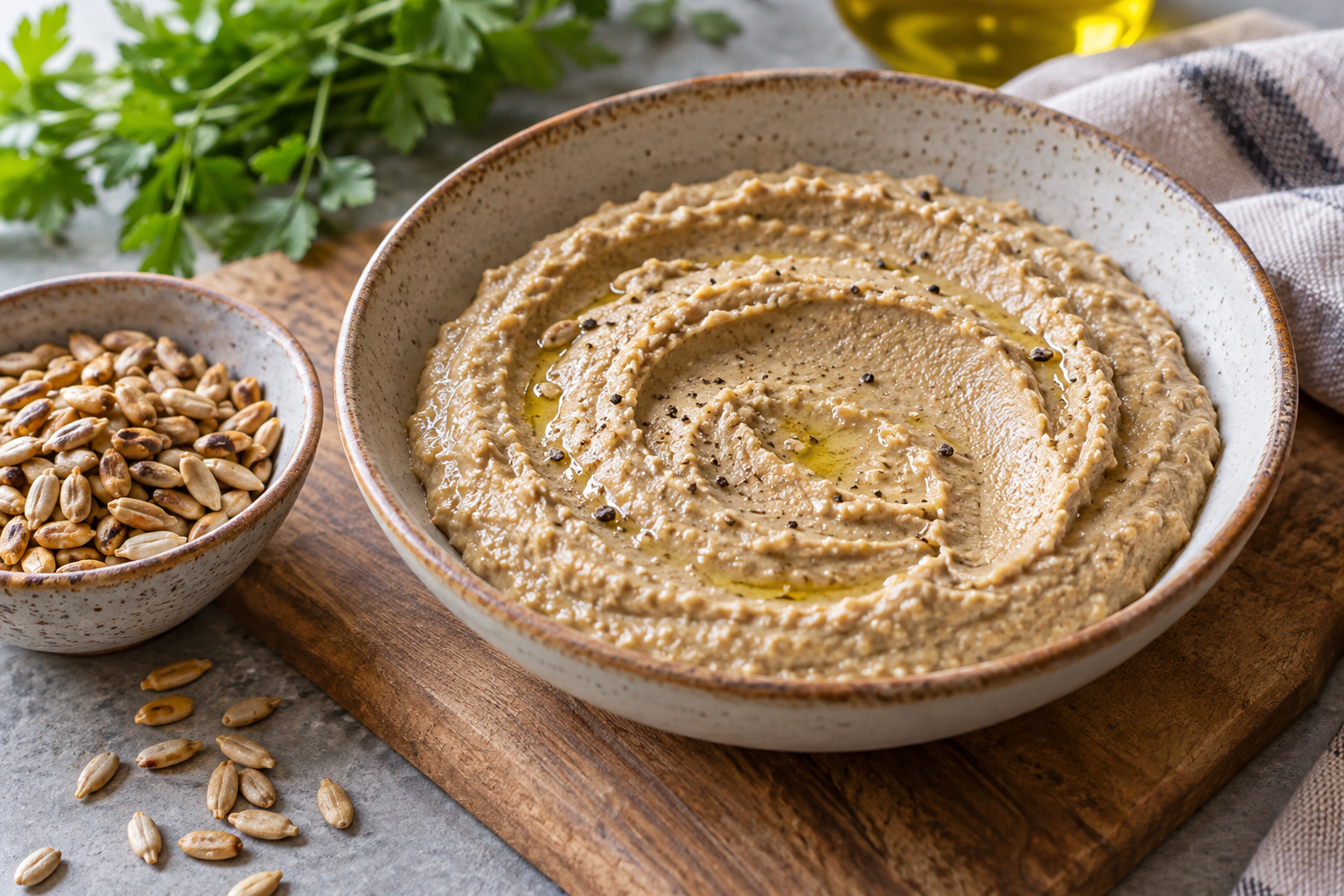
Savory sunflower-seed spread
Serves 6 · Preparation 15 min · Cooking 6 min · 10 minutes kernel cooling
A modern adaptation for home cooking. Times are approximate.
Ingredients
- 180 g hulled unsalted sunflower kernels
- 20 ml neutral oil
- 20 ml lemon juice
- 100–150 ml water
- 3 g salt
- 0.5 g ground black pepper, optional modern seasoning
Method
- Toast kernels in a dry skillet over medium-low heat 5–6 minutes, stirring frequently, until fragrant and pale golden. Transfer to a plate and cool 10 minutes.
- Pulse cooled kernels to fine crumbs in a suitably small processor bowl. With the machine off, scrape seeds down from the sides. Add oil, lemon and salt, then add the first 100 ml water gradually while blending and scraping as needed.
- Blend until soft enough to spread, stopping the machine before scraping. Use the remaining water in small additions, up to the listed amount, if needed. Aim for a mixture that holds a spoon trail rather than pours; a little fine seed texture is acceptable. Follow appliance limits if the motor becomes warm.
- Taste the finished spread and serve with bread or washed vegetable sticks. Add optional pepper at serving and refrigerate the remainder promptly.
Substitutions and adjustments
- Use commercially roasted unsalted kernels and omit toasting.
- Use a blender with a narrow bowl; add water gradually and stop to scrape rather than overheating it.
Historical choices: Ancient Eastern North American sunflower is documented; this seed spread, lemon and appliance method are modern.
Troubleshooting: Coarse texture: switch off, scrape and redistribute the seeds, then blend again; a very large bowl may not catch this quantity. Thin texture: stop adding water and serve as a dip rather than expecting a firm butter. Bitter or scorched flavour: check the seeds and toasting; extra seasoning cannot reverse burning.
Storage and reheating: Refrigerate covered up to 3 days. Stir before serving.
Kitchen note: Use commercially hulled edible seeds. Refrigerate the water-containing spread within 2 hours.
Sources and further reading
- Smith, The domestication of Helianthus annuus. Smithsonian-hosted primary abstract inspected: Eastern North American sunflower specimens predating 3000BP; no seed butter recipe.
- Blackman et al., Sunflower domestication alleles support single domestication center in eastern North America. Primary genetic study inspected in full: domestication loci and neutral markers support an Eastern North American origin for extant cultivated sunflower; no seed-spread recipe or exact archaeological cooking method.
Browse Ancient Recipes for Modern Kitchens · More creative work at Incoprea


Comments
Post a Comment