White Beans, Fennel and Egg Salad
MODERN KITCHENS · 013 / 100
Roman · Roman Mediterranean · Roman imperial tradition; surviving compilation approximately 4th–5th centuries CE
Evidence: historically informed adaptation. The historical evidence and modern cooking choices are distinguished below.
This filling salad combines soft beans with crisp fennel and firm chopped egg. Apicius 209 associates a bean preparation with eggs and green fennel, although its wording about the seeds is uncertain. We retain the combination while identifying canned cannellini as a modern supermarket substitute; their species should not be projected back into the Roman passage.
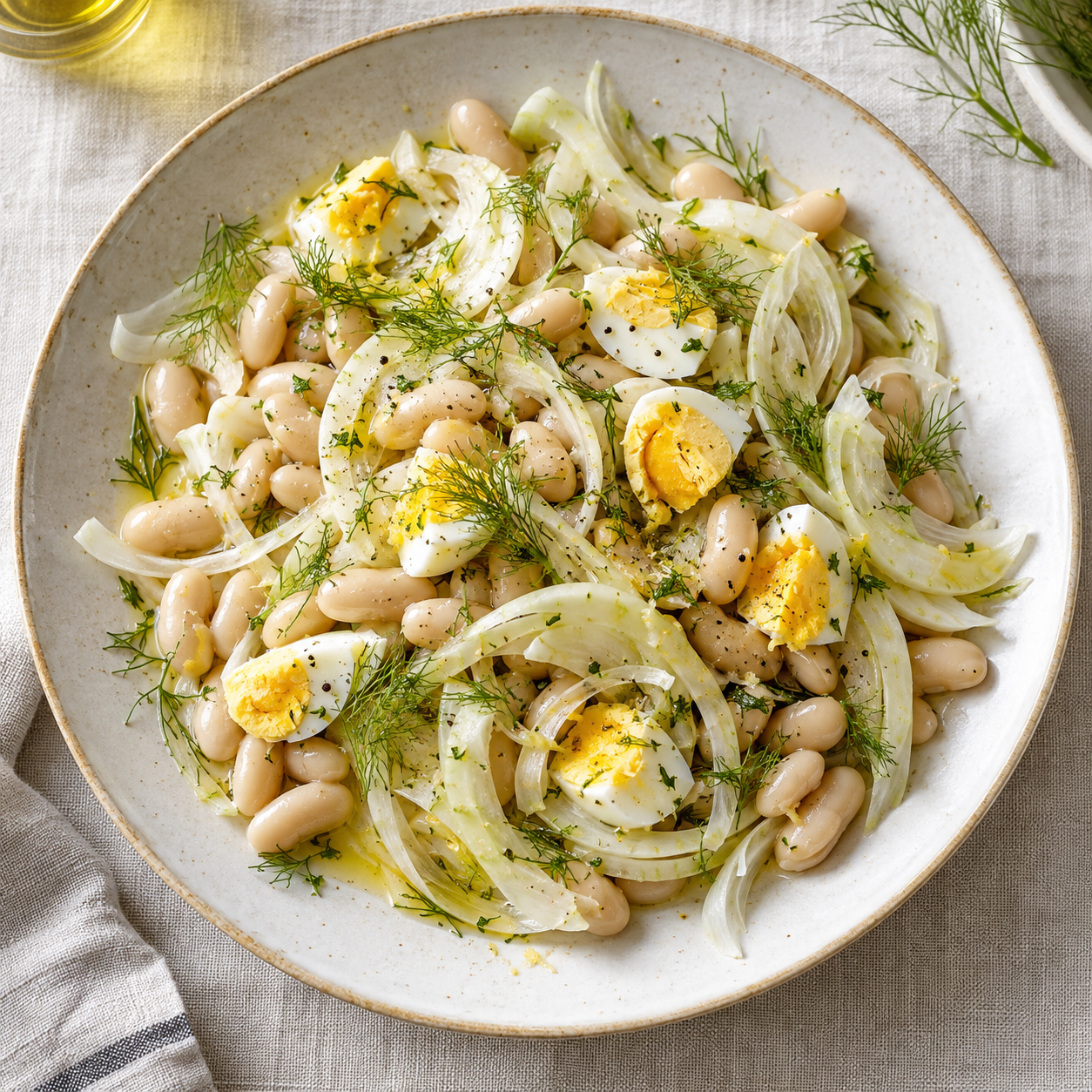
Choose plain beans in water, rinse and drain them, then let excess liquid fall away before dressing. Fennel is sliced finely so a mouthful does not feel dominated by a hard chunk. Use the feathery fronds too when available. Their gentle flavour connects with the bulb while the egg adds richness and turns the side dish into a light lunch.
A small amount of grape juice stands in for the source’s reduced-wine idea, with vinegar chosen to keep the modern salad lively. Neither our ratio nor our cold serving temperature is attested. The edition notes help distinguish the published interpretation from the surviving ingredients. We do not reproduce ambiguous seed removal or infer a particular ancient bean cultivar.
Toss the beans and fennel first, then fold in egg gently so the yolk remains visible. Taste before adding salt because canned beans vary. Bread can complete the meal, or a smaller portion can accompany vegetables. Keep the finished salad refrigerated and serve within a sensible time; a sweet-sharp dressing does not make an egg dish safe to leave out.
White Beans, Fennel and Egg Salad
Serves 4 · Preparation 15 min · Cooking 12 min · 5 minutes cooling eggs
A modern adaptation for home cooking. Times are approximate.
Ingredients
- 480 g drained canned cannellini beans (two 400 g cans)
- 160 g fennel bulb, finely sliced
- 3 large eggs
- 25 ml (5 tsp) olive oil
- 15 ml (1 tbsp) white-wine vinegar
- 20 ml (4 tsp) white grape juice
- 10 g fennel fronds or parsley, chopped
- 1.25 ml (¼ tsp) black pepper
- 1.25 ml (¼ tsp) salt, to taste
Method
- Cover eggs with cold water, bring to a boil and simmer 10–12 minutes until whites and yolks are firm. Cool promptly under cold water, peel and chop.
- Rinse and drain beans. Mix oil, vinegar, juice and pepper.
- Toss beans, fennel and herbs with dressing; fold in egg. Taste for salt and serve chilled or cool.
Substitutions and adjustments
- Use canned cooked fava beans for an Old World pulse choice.
- Thin celery slices replace fennel bulb, changing the flavour.
Historical choices: Apicius 209 supplies a bean, egg and green-fennel association. Cannellini beans and the cold salad method are explicit modern substitutes.
Troubleshooting: Mushy beans: fold with a wide spoon, or serve ingredients in separate layers.
Storage and reheating: Refrigerate for up to 2 days; keep cold until serving.
Kitchen note: Use fully cooked canned beans and firm hard-boiled eggs. Do not cook dried beans solely in a slow cooker.
Sources and further reading
- Apicius, Book 5, recipe 209 (Vehling numbering). Inspected surviving recipe and editorial notes. Apicius 209 supplies a bean, egg and green-fennel association. Cannellini beans and the cold salad method are explicit modern substitutes. Quantities and modern timetable are our own; translation contains editorial additions.
- LacusCurtius: edition and translation notes. Explains limitations and bracketed additions of the 1936 Vehling translation; not proof of an exact ancient appearance.
- NYAM collections announcement via CHSTM. Institutional account places the recipe collection in the fourth and fifth centuries; individual material may be earlier.
Browse Ancient Recipes for Modern Kitchens · More creative work at Incoprea


Comments
Post a Comment