Baked White-Fish and Egg Terrine
MODERN KITCHENS · 017 / 100
Roman · Roman Mediterranean · Roman imperial tradition; surviving compilation approximately 4th–5th centuries CE
Evidence: adapted surviving recipe. The historical evidence and modern cooking choices are distinguished below.
Fish and eggs can form a sliceable dish rather than a sauce. Apicius 139 describes a small-fish patina with eggs and seasoning. Our modern version chooses boneless white fish and a small loaf tin, making the result easy to portion. The species, quantities and oven method are ours; they do not reconstruct an exact ancient mould.
Cook the fish gently before folding it into the egg mixture. Large flakes give the terrine a visible texture, while a vigorous stir would reduce it to paste. Check for bones even when fillets are sold as boneless. A paper-lined tin makes removal straightforward and avoids requiring a specialised historical vessel.
We use diluted commercial fish sauce for savouriness and fresh parsley as an accessible herb. The available English translation includes interpretation, so consult the edition notes before treating its modern terminology as definitive. A water bath moderates oven heat and reduces dry edges; that practical choice also provides a clear way to monitor the centre of the dish.
The terrine should be set through the middle while retaining moisture. A thermometer is more useful than an attractive surface colour because egg and fish safety are not visible from the top. Rest briefly, then cut into thick slices and serve with bread or a vegetable salad. Chill leftovers promptly; a cooked terrine is not a preserved food even when it is served cold later.
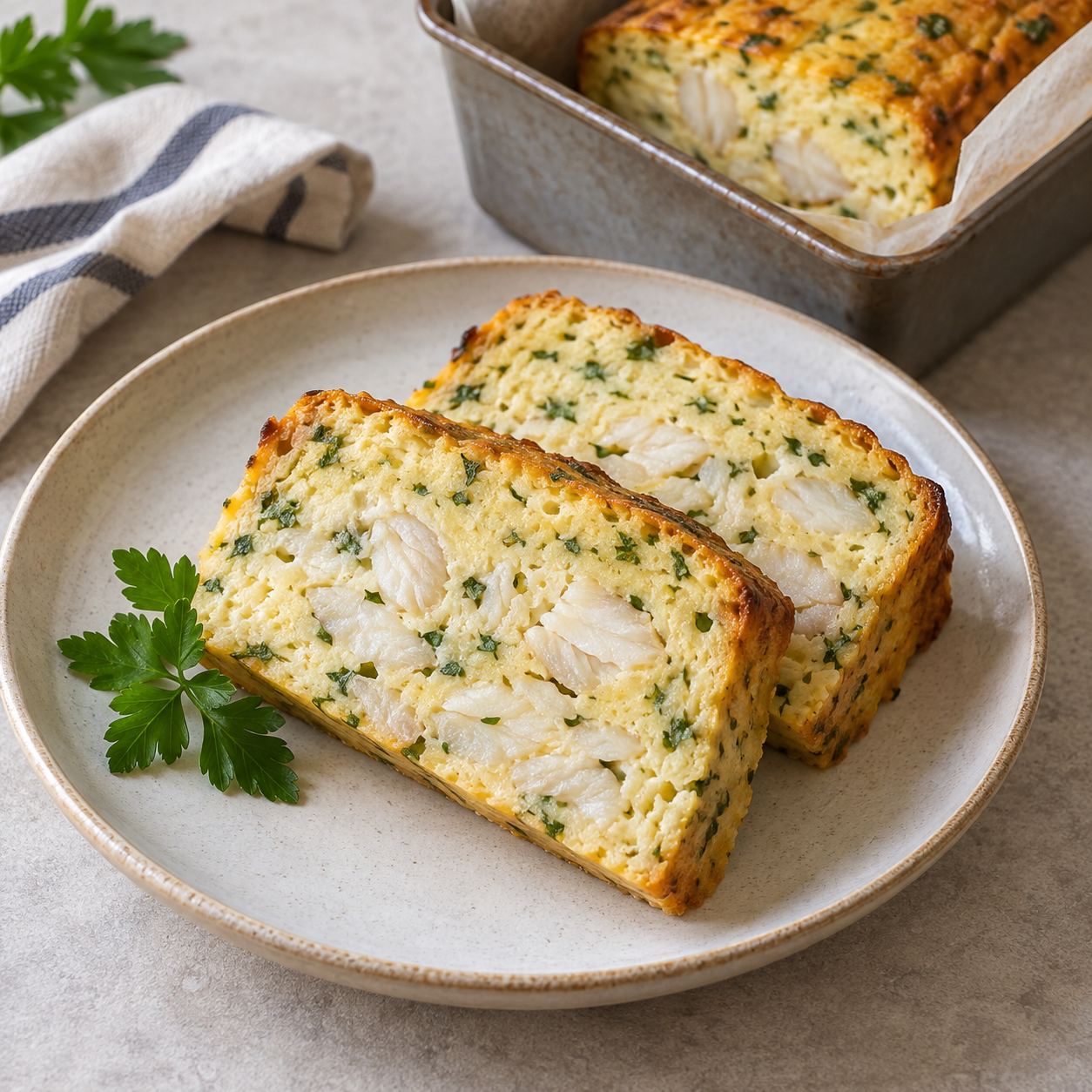
Baked White-Fish and Egg Terrine
Serves 4 · Preparation 15 min · Cooking 55 min · 10 minutes resting
A modern adaptation for home cooking. Times are approximate.
Ingredients
- 450 g boneless white-fish fillets, such as cod, hake or tilapia
- 5 large eggs
- 100 ml pasteurized milk
- 30 ml (2 tbsp) water
- 10 ml (2 tsp) commercial fish sauce
- 10 g parsley, chopped
- 1.25 ml (¼ tsp) black pepper
- 10 ml (2 tsp) olive oil, for greasing
Method
- Heat oven to 170°C/340°F. Grease and line a small 20 cm loaf tin.
- Place fish in a pan with water just covering it; gently simmer 6–10 minutes until it reaches 63°C/145°F and flakes. Drain, check for bones and break into large flakes.
- Beat eggs, milk, 30 ml water, fish sauce, parsley and pepper. Fold in fish and pour into tin.
- Set tin in a roasting pan; add hot water halfway up the tin. Bake 35–45 minutes until the centre is set and reaches 74°C/165°F.
- Rest 10 minutes, lift out using paper and slice.
Substitutions and adjustments
- Use drained canned salmon with bones removed for a modern convenience version.
- For fish-sauce avoidance, use¼ tsp salt.
Historical choices: Apicius 139 provides fish-and-egg patina evidence. Boneless white fish, milk, parsley and a lined loaf tin are modern specifications.
Troubleshooting: Liquid centre: return to oven for 5–10 minutes and check temperature. Dry edges: use the water bath and avoid overbaking.
Storage and reheating: Cool in shallow containers and refrigerate within 2 hours. Keep up to 3 days; reheat leftovers to 74°C/165°F until steaming throughout.
Kitchen note: Cook fish initially to 63°C/145°F and final mixed casserole to 74°C/165°F. Contains fish, egg and milk.
Sources and further reading
- Apicius, Book 4, recipe 139 (Vehling numbering). Inspected surviving recipe and editorial notes. Apicius 139 provides fish-and-egg patina evidence. Boneless white fish, milk, parsley and a lined loaf tin are modern specifications. Quantities and modern timetable are our own; translation contains editorial additions.
- LacusCurtius: edition and translation notes. Explains limitations and bracketed additions of the 1936 Vehling translation; not proof of an exact ancient appearance.
- NYAM collections announcement via CHSTM. Institutional account places the recipe collection in the fourth and fifth centuries; individual material may be earlier.
Browse Ancient Recipes for Modern Kitchens · More creative work at Incoprea


Comments
Post a Comment