Ancient Crop Questions, a Fresh Soybean and Rice Lunch
MODERN KITCHENS · 083 / 100
Bronze Age crop-transfer and mixed farming traditions · East Asia, with Korean comparative context · c. 1500–300 BCE
Evidence: historically informed adaptation. The historical evidence and modern cooking choices are distinguished below.
Rice, soybeans and millet did not enter every East Asian community at the same time. Comparative archaeological research discusses Korean farming and wild resources. Research on cereal-legume patterns supplies a wider East Asian comparison. Neither records this salad.
The recipe deliberately uses modern shelled edamame and freshly cooked rice. Immature green soybeans sold frozen are not evidence for an identical ancient harvest stage. Cucumber, lemon juice and a small amount of oil supply a contemporary fresh serving style. No claim is made that chilled rice salad was a named Bronze Age Korean food, or that refrigeration belonged to the historical method.
Cook the rice, then spread it in a shallow dish so it cools promptly. Follow the edamame packet's cooking instructions; the beans should be tender and safe to eat rather than merely thawed. Add the cucumber after the warm ingredients have cooled, preserving its crisp texture. The lemon dressing should coat the grain lightly rather than leave a puddle.
This makes a portable lunch when kept cold, or a useful side served immediately. Its distinct role is a fresh grain-and-bean salad, unlike a hot soup or soft porridge. The archaeological sources frame questions about crop histories; the ingredients' exact combination, frozen beans, dressing and handling instructions are modern. Good food history can inspire a practical meal while retaining the boundaries of what ancient evidence actually establishes.
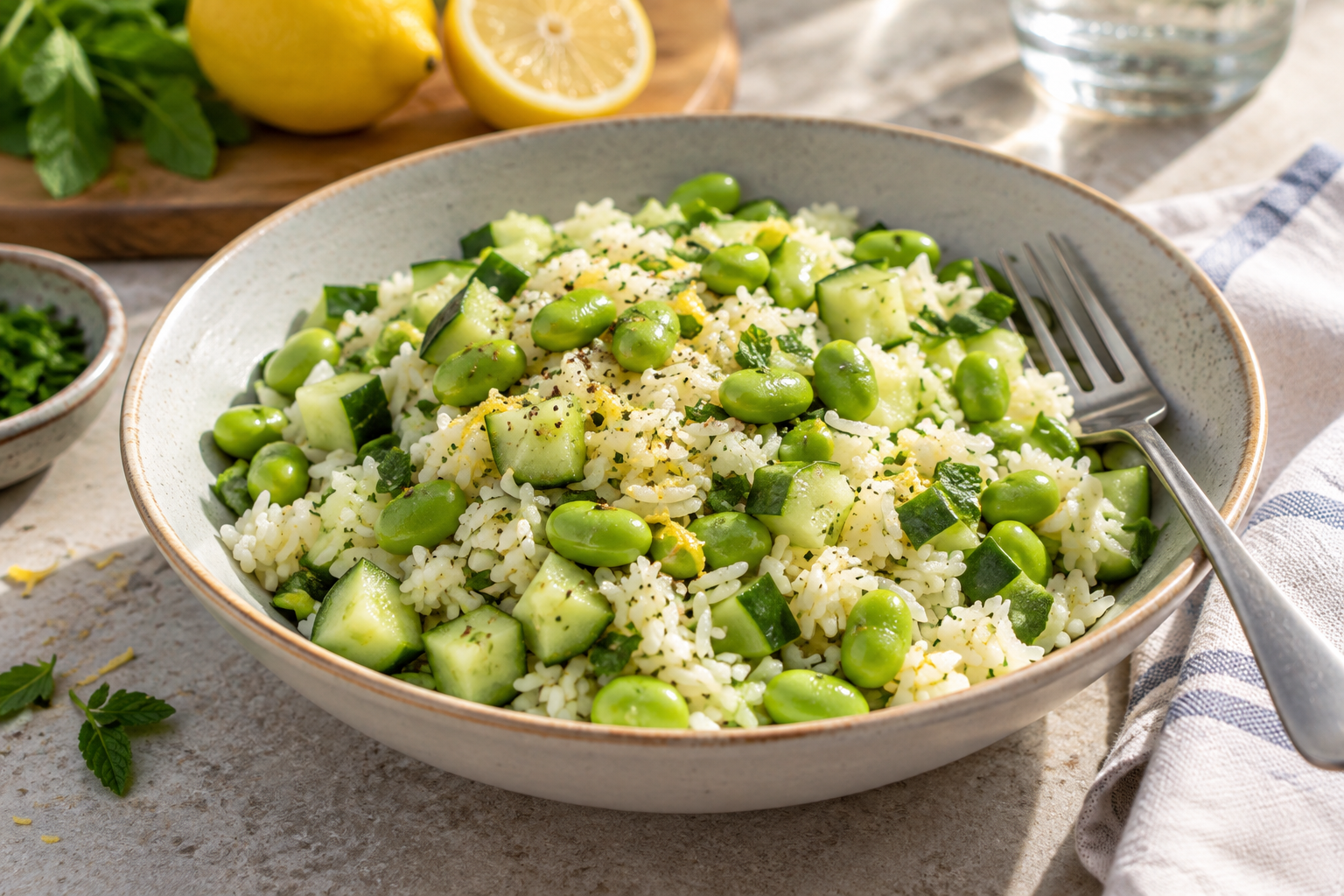
Edamame and rice salad
Serves 4 · Preparation 15 min · Cooking 20 min · 5 minutes rice rest; 20–30 minutes cooling
A modern adaptation for home cooking. Times are approximate.
Ingredients
- 180 g white long-grain rice
- 330 ml water for rice
- 250 g frozen shelled edamame
- 250 g cucumber, diced
- 25 ml lemon juice
- 20 ml neutral oil
- 3 g salt
- 5 g fresh parsley, finely chopped, optional modern garnish
- 0.5 g ground black pepper, optional modern seasoning
- 1 g finely grated lemon zest, optional modern garnish
Method
- Rinse rice. Put in a saucepan with measured water, bring to a boil, cover and simmer on low heat 12–15 minutes or according to packet. Rest covered 5 minutes.
- Cook edamame separately according to package directions, usually boiling 4–6 minutes. Drain.
- Spread rice and beans in shallow dishes to cool promptly; refrigerate within 1 hour if serving later.
- Mix lemon, oil and salt. Fold into cool rice with beans and cucumber. Serve immediately or keep chilled. Add the optional parsley at serving. Add optional pepper to taste. Scatter optional lemon zest over the salad.
Substitutions and adjustments
- Use 300 g fully cooked canned white beans if edamame is unavailable; this changes the crop.
- Use brown rice according to package water and cooking times.
Historical choices: East Asian crop histories are the context; edamame harvest stage, cucumber pairing and chilled salad format are modern.
Troubleshooting: Wet salad needs better-drained beans. Clumpy rice can be gently loosened with a fork before dressing.
Storage and reheating: Refrigerate at 4°C or colder and eat within 1 day; keep cold during transport.
Kitchen note: Cook frozen edamame as directed. Cool rice within 1 hour and keep refrigerated. Do not leave a lunch container at room temperature.
Sources and further reading
- Stevens and Fuller, The importance of wild resources in early agricultural systems. Archaeological context for Korean rice, legumes and gathered resources; warns of intrusive uncharred rice at some sites, no exact porridge recipe.
- He et al., Coupled and decoupled legumes and cereals in prehistoric China. Archaeobotanical synthesis supports northern Chinese soybeans alongside millets; no mushroom soup or salad recipe.
Browse Ancient Recipes for Modern Kitchens · More creative work at Incoprea


Comments
Post a Comment