Maize Meal Becomes a Practical Baked Side
MODERN KITCHENS · 091 / 100
Preceramic maize-resource traditions · North coast of Peru · c. 4800–1800 BCE
Evidence: historically informed adaptation. The historical evidence and modern cooking choices are distinguished below.
Ancient maize was not one uniform crop. Research at Paredones and Huaca Prieta documents early flour-corn and popcorn remains. Norte Chico research examines maize in a later regional food economy. Neither gives our baked-side formula.
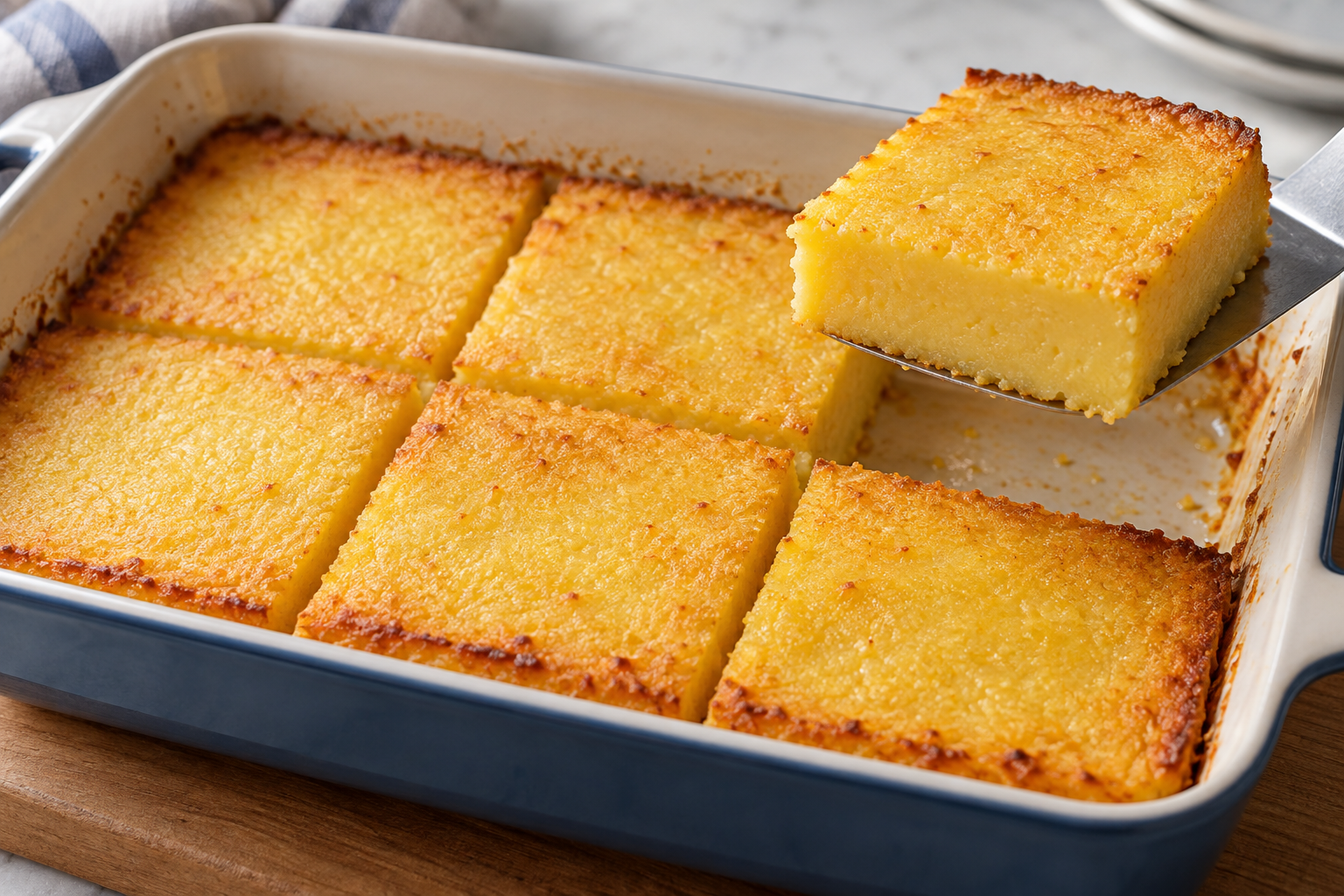
We cook ordinary maize meal into a thick paste, spread it in a shallow dish and bake it into squares. This is an openly modern method, not an ancient cornbread recipe claimed from a cob. Fine commercial cornmeal is milled and sold differently from archaeological maize, and neutral oil, exact water and a controlled oven provide modern convenience.
Cooking the meal first prevents a dry, gritty center. Add it gradually to water while stirring, then keep the paste moving over low heat until the grains are fully tender. A thin layer in the dish dries and firms more readily than a deep one. Let the baked slab stand before cutting so the squares hold their shape.
Serve warm with stew or vegetables. The squares should have a lightly firm top and a moist, tender interior, without becoming a sweet cake. Their role is a grain accompaniment, distinct from a tortilla, a wrapped tamale or a breakfast cereal. The crop research supplies the historical connection; the gel-cooking step, baking dish, portions and resulting texture are contemporary choices. This makes a useful food while resisting the temptation to read a complete recipe into an ancient maize find.
Savory baked cornmeal squares
Serves 6 · Preparation 15 min · Cooking 45 min · 15 minutes resting
A modern adaptation for home cooking. Times are approximate.
Ingredients
- 200 g fine plain yellow cornmeal
- 850 ml water
- 25 ml neutral oil, divided
- 4 g salt
Method
- Heat oven to 200°C. Oil a 20 × 25 cm shallow baking dish with 5 ml oil.
- Bring water and salt to a simmer. Whisk in cornmeal gradually. Cook gently 15–20 minutes, stirring often, until tender and very thick; follow packet timing if longer.
- Stir in remaining oil. Spread about 2 cm thick in the dish and smooth the surface.
- Bake 25 minutes until top firms and edges color lightly. Rest 15 minutes before cutting into six squares.
Substitutions and adjustments
- Use instant polenta according to packet directions for a shorter first cooking stage.
- Use white cornmeal if yellow is unavailable; maize variety and color differ.
Historical choices: Ancient coastal Peruvian maize supports the crop story; precooking, baking into squares and all measurements are modern.
Troubleshooting: Gritty centers need longer saucepan cooking. Fragile squares need a longer rest before cutting.
Storage and reheating: Refrigerate up to 3 days or freeze 2 months. Reheat to 74°C in a covered dish.
Kitchen note: Cook cornmeal fully; do not taste uncooked batter. Cool in shallow portions and refrigerate promptly.
Sources and further reading
- Grobman et al., Preceramic maize from Paredones and Huaca Prieta. Primary cached abstract inspected: maize macrofossils and direct dating as early as 6775–6504calBP; ancient crop types, not this baked-square recipe.
- Haas et al., Maize in Late Archaic Norte Chico. Primary study cached abstract inspected: maize evidence c. 3000–1800 BCE; no modern sweet-corn chowder or baking formula.
Browse Ancient Recipes for Modern Kitchens · More creative work at Incoprea


Comments
Post a Comment