Quick Coriander Prawns
MODERN KITCHENS · 029 / 100
Roman · Roman Mediterranean · Roman imperial tradition; surviving compilation approximately 4th–5th centuries CE
Evidence: historically informed adaptation. The historical evidence and modern cooking choices are distinguished below.
A brief grill-inspired method keeps this seafood dish manageable. Apicius 398 associates broiled lobster with pepper, coriander and oil. This version replaces lobster with supermarket peeled prawns and uses a frying pan. The substitution is substantial and visible: the result is historically informed, not an assertion that the ancient text names these prawns.
Buy raw peeled prawns, fresh or frozen, so their cooking state is clear. Thaw frozen ones in the refrigerator and pat dry to help the surface cook evenly. A hot pan and a single layer give quick contact with the oil. If the pan is small, use two batches rather than piling the prawns into a mound.
Fresh coriander and a little coriander seed give related but different aromas. Their amounts are modern choices, as is the small splash of vinegar that finishes the pan. Consult the edition notes with the source to see where the English version supplies culinary interpretation. We omit butter and any unfamiliar historical serving apparatus.
The prawns should be opaque and firm without becoming hard. A thermometer supplies the modern seafood endpoint; appearance is a helpful texture cue alongside it. Serve promptly with bread, grain or vegetables. This short method makes a useful meal even when the historical species is inaccessible. The generated plate illustrates the modern substitution and cannot establish what the original lobster preparation looked like.
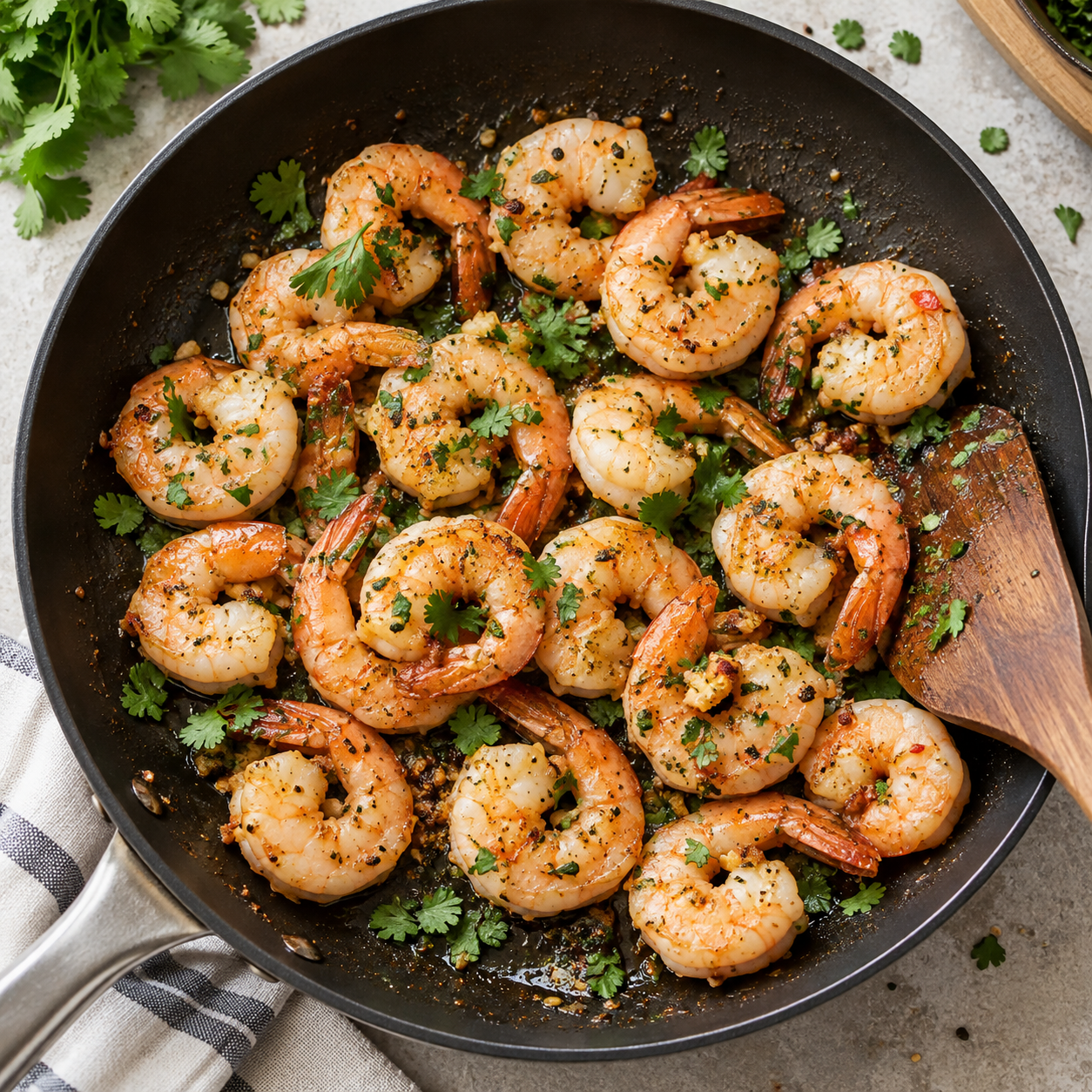
Quick Coriander Prawns
Serves 4 · Preparation 15 min · Cooking 12 min
A modern adaptation for home cooking. Times are approximate.
Ingredients
- 600 g raw peeled prawns/shrimp, deveined
- 25 ml (5 tsp) olive oil
- 2.5 ml (½ tsp) ground coriander
- 1.25 ml (¼ tsp) black pepper
- 1.25 ml (¼ tsp) salt
- 15 g fresh coriander/cilantro, chopped
- 10 ml (2 tsp) white-wine vinegar
Method
- Thaw prawns in the refrigerator if frozen, then pat dry. Mix with half the oil, ground coriander, pepper and salt.
- Heat remaining oil in a wide frying pan over medium-high heat. Cook prawns in a single layer for 2–3 minutes per side until opaque, firm and 63°C/145°F. Use 2 batches if needed.
- Take pan off heat, add fresh coriander and vinegar, toss and serve immediately.
Substitutions and adjustments
- Flat-leaf parsley replaces fresh coriander with a different flavour.
- Use raw peeled medium shrimp; cooking time may be slightly shorter.
Historical choices: Apicius 398 provides a coriander-oil treatment for broiled lobster. Prawns, frying pan, measured seasoning and vinegar finish are modern changes.
Troubleshooting: Watery pan: drain and pat prawns dry, and cook in smaller batches. Tough prawns: stop promptly at the endpoint.
Storage and reheating: Refrigerate within 2 hours for up to 2 days; reheat to 74°C/165°F, avoiding prolonged cooking.
Kitchen note: Cook raw prawns/shrimp to 63°C/145°F. Contains shellfish.
Sources and further reading
- Apicius, Book 9, recipe 398 (Vehling numbering). Inspected surviving recipe and editorial notes. Apicius 398 provides a coriander-oil treatment for broiled lobster. Prawns, frying pan, measured seasoning and vinegar finish are modern changes. Quantities and modern timetable are our own; translation contains editorial additions.
- LacusCurtius: edition and translation notes. Explains limitations and bracketed additions of the 1936 Vehling translation; not proof of an exact ancient appearance.
- NYAM collections announcement via CHSTM. Institutional account places the recipe collection in the fourth and fifth centuries; individual material may be earlier.
Browse Ancient Recipes for Modern Kitchens · More creative work at Incoprea


Comments
Post a Comment