Warm Grapes over Cheese Toast
MODERN KITCHENS · 060 / 100
Greek literary fruit, cheese and bread context · Greek-speaking Mediterranean · Classical through Roman-era Greek food references, approximately 500 BCE–250 CE
Evidence: historically informed adaptation. The historical evidence and modern cooking choices are distinguished below.
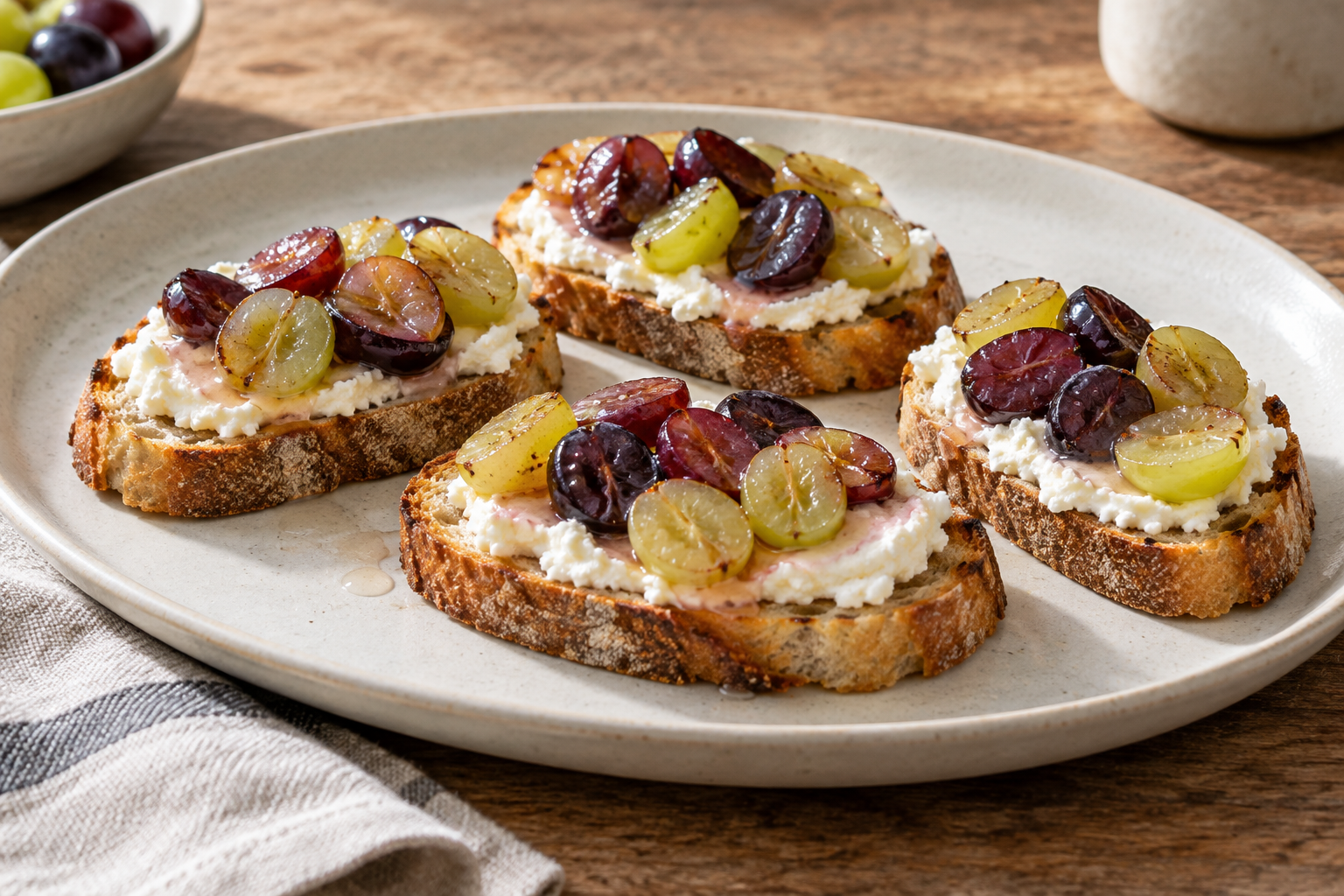
Bread, cheese and fruit offer a useful small meal, but their familiarity should not hide the evidence boundary. Athenaeus’s sweet-food passages mention grapes, and Book II’s banquet account includes toasted cheese. Those references do not describe grape-topped cheese toast.
The Greek-speaking context spans classical material preserved in a compilation around 200 CE. This snack is a new practical assembly. We use pasteurized ricotta or cottage cheese rather than assigning a modern cheese name to an uncertain ancient product. Commercial sliced bread supplies the base, and seedless grapes make the topping easier to eat.
Warm the grapes briefly in a frying pan so their juices emerge without turning the fruit into jam. Toast the bread separately so it remains crisp when the soft cheese is added. A little oil is enough; honey is unnecessary when the grapes are ripe. The contrast of crisp bread, cool or room-temperature cheese and warm fruit gives the dish its character.
Assemble near serving because the grape juice gradually softens the toast. Four modest pieces work as a light lunch component or eight smaller pieces as starters. This format also provides a convenient way to use leftover bread without implying a recovered ancient household practice. The recipe invites attention to distinct textures while keeping the historical claim small. The sources anchor familiar foods and an interest in cheese under heat; warming grapes, spreading modern cheese, choosing the bread thickness and combining all three remain contemporary decisions.
Warm grape and soft-cheese toast
Serves 4 · Preparation 10 min · Cooking 8 min
A modern adaptation for home cooking. Times are approximate.
Ingredients
- 4 slices (about 160 g) plain wholemeal or white bread
- 160 g pasteurized ricotta or cottage cheese
- 250 g seedless grapes, washed and halved
- 15 ml (1 tbsp) olive oil
- 1 g (¼ tsp) salt, optional
Method
- Toast bread until crisp and golden.
- Heat oil in a frying pan over medium heat. Add grape halves and warm 3–4 minutes, stirring gently, until some juice appears but most fruit holds its shape.
- Spread cheese on warm toast. Spoon grapes and a little pan juice over the top; add a small pinch of the measured salt if desired.
- Serve immediately while the bread is still crisp.
Substitutions and adjustments
- Pasteurized fresh goat cheese makes a stronger modern topping.
- Use ripe pear slices and a longer gentle pan cooking time for a different modern fruit snack.
Historical choices: Ancient grape and cheese references supply context; this bread, cheese and warmed-fruit assembly is newly devised, not an attested ancient toast.
Troubleshooting: Soggy bread: use only a little grape juice and assemble near serving. Bland fruit: choose ripe grapes.
Storage and reheating: Keep cheese and cooked grapes refrigerated separately up to 2 days. Toast bread fresh and assemble at serving.
Kitchen note: Use pasteurized cheese and wash grapes. Refrigerate perishable toppings promptly; do not store assembled toast at room temperature.
Sources and further reading
- Athenaeus, Deipnosophistae: public-domain translation. Book II, 47: grapes among sweet foods; no cheese toast.
- Athenaeus, Deipnosophistae: public-domain translation. Book II, 65C: toasted cheese in a banquet description; not this modern assembly.
Browse Ancient Recipes for Modern Kitchens · More creative work at Incoprea


Comments
Post a Comment