Wheat at Harappa, Bread on Today's Skillet
MODERN KITCHENS · 074 / 100
Mature Harappan crop traditions · Indus Valley, South Asia · c. 2600–1900 BCE
Evidence: historically informed adaptation. The historical evidence and modern cooking choices are distinguished below.
Harappa's plant remains invite us to think about grain before picturing a finished loaf. Recent research documents wheat within the crop assemblage. Excavation-report work stresses that archaeological context matters when interpreting plant use.
This bread is a historically informed adaptation, not a named Harappan chapati recovered intact. Modern wholewheat flour, measured water and a familiar skillet produce thin breads that are easy to serve alongside pulses or vegetables. The sources do not establish our proportions, rolling technique or the exact ancient equipment. The Indus script has not supplied a readable recipe for this preparation.
Resting the dough lets the flour absorb water and makes rolling easier. Keep the pieces covered while working so their surfaces do not dry out. A hot, dry pan should set brown spots quickly; if the bread remains pale and leathery, raise the heat a little. Small breads are easier to turn and cook evenly on ordinary home burners.
Serve the stack warm, wrapped in a clean towel to retain softness. This has a distinct meal role as an unleavened accompaniment rather than a filled pastry, biscuit or thick baked loaf. Its usefulness comes from a short ingredient list and visible cooking cues. The historical introduction explains why wheat belongs in the collection, while the recipe offers a modern way to transform flour without pretending to recover an exact ancient household menu.
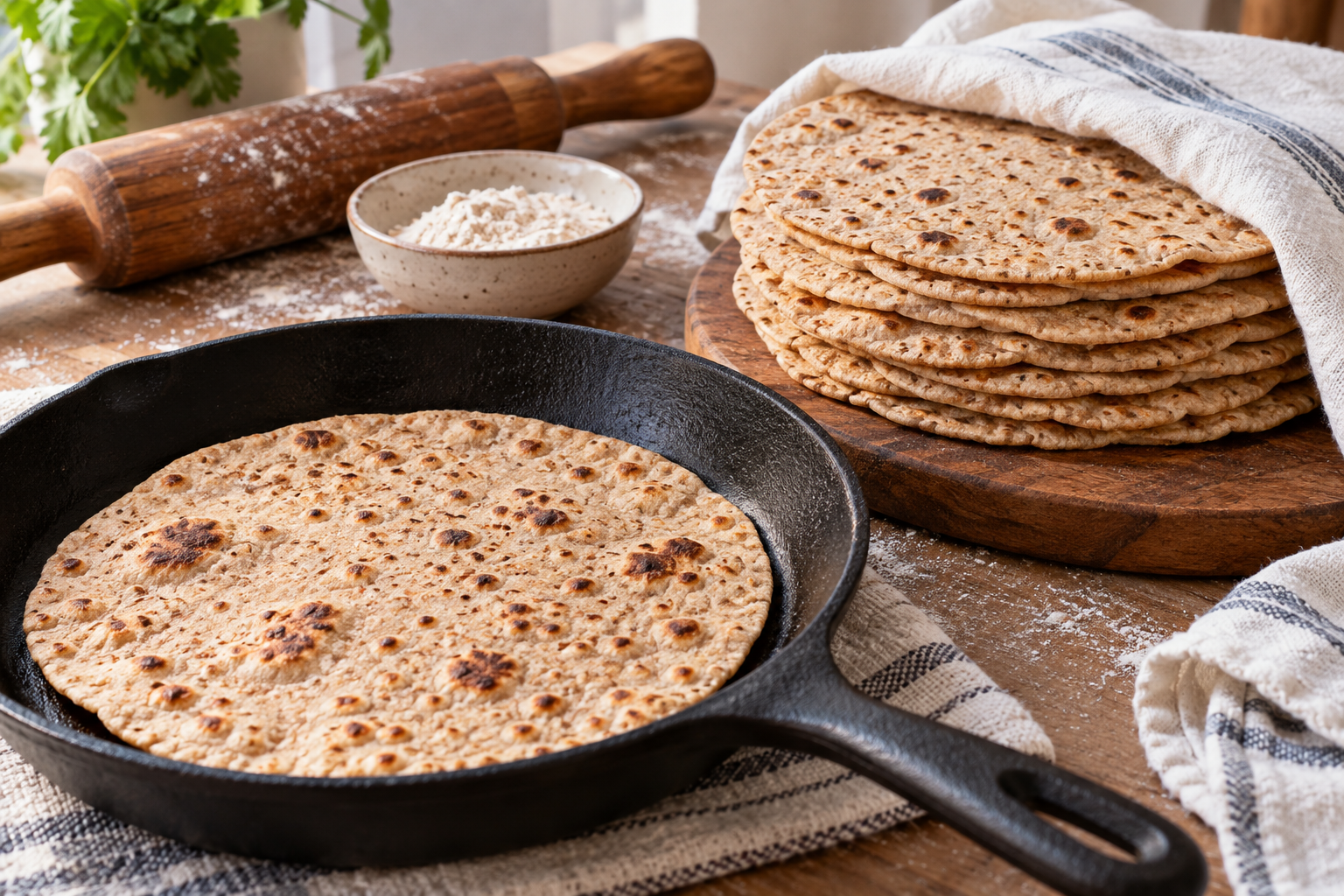
Wholewheat skillet flatbreads
Serves 8 · Preparation 20 min · Cooking 16 min · 20 minutes dough rest
A modern adaptation for home cooking. Times are approximate.
Ingredients
- 250 g wholewheat flour, plus 20 g for rolling
- 170–190 ml warm water
- 3 g salt
- 10 ml neutral oil, optional for brushing
Method
- Mix flour and salt with 170 ml water. Knead 5 minutes, adding water by teaspoons until soft but not sticky.
- Cover and rest 20 minutes. Divide into eight pieces and keep covered.
- Roll each to a circle about 16 cm wide, dusting lightly with flour.
- Heat a heavy dry skillet over medium-high heat. Cook each bread 45–60 seconds until bubbles appear, turn and cook 45–60 seconds until brown spots form and no raw dough remains.
- Brush lightly with optional oil and stack beneath a clean towel. Serve warm.
Substitutions and adjustments
- Use 150 g wholewheat plus 100 g plain flour for softer breads.
- The oil is optional; omit for a simpler dough.
Historical choices: Harappan wheat provides the ingredient connection; skillet cooking and our thin rolled bread formula are a modern reconstruction.
Troubleshooting: Cracking dough needs a teaspoon of water and a longer rest. Tough breads may be rolled too thick or cooked too slowly.
Storage and reheating: Keep covered for the meal. Refrigerate up to 2 days or freeze 1 month; warm in a skillet.
Kitchen note: Do not eat raw flour or dough. Cook both sides thoroughly; use caution with the hot dry skillet.
Sources and further reading
- James et al., Taphonomy and labour at Harappa. Primary paper inspected, especially pp. 4–5: barley, wheat, lentil, pea, small chickpea quantities; charred finds have multiple pathways and do not preserve these recipes.
- Miller, Urban Palaeoethnobotany at Harappa. Excavation-report context emphasizes combining plant remains with archaeological context; no exact bread, soup or dumpling recipe.
Browse Ancient Recipes for Modern Kitchens · More creative work at Incoprea


Comments
Post a Comment